
Military bearing lead times of 60 weeks or more are not an inconvenience — they are a programme stopper. When a legacy bearing is discontinued and no direct replacement exists, the equipment sits. The Bearing Specialists have been selected to reverse engineer legacy defence bearings in small volumes, reducing lead times from 60 weeks to 18 weeks for military programmes that cannot wait.
Defence programmes run on long equipment cycles. The bearing specified when a system entered service may no longer be available 20 or 30 years later. Original manufacturers discontinue product lines. Supply chains close. Standard catalogues offer nothing close to the original specification.
At that point, the choice is either reverse engineering or an extended equipment outage — and 60-week lead times on sourced alternatives are not unusual in this environment. The Bearing Specialists have solved this problem for military customers by reverse engineering legacy bearings in small volumes, delivering replacement components in 18 weeks rather than 60.
Why Legacy Bearings Disappear From the Supply Chain
Defence equipment operates for decades. Bearings specified in the original design may have been discontinued, manufacturers may have shifted production priorities, or the volumes required are simply too small for standard production runs. The US Government Accountability Office has documented how defence acquisition lead times consistently exceed estimates across spare parts programmes — a challenge that runs through every level of military supply chain management.
When a bearing cannot be sourced directly, the procurement process lengthens at every stage. Identifying a potential alternative takes time. Testing and qualifying that alternative against the original specification takes more. For military mobile radar systems, heavy artillery, and missile detection equipment, this timeline is not acceptable.
What the Reverse Engineering Process Involves
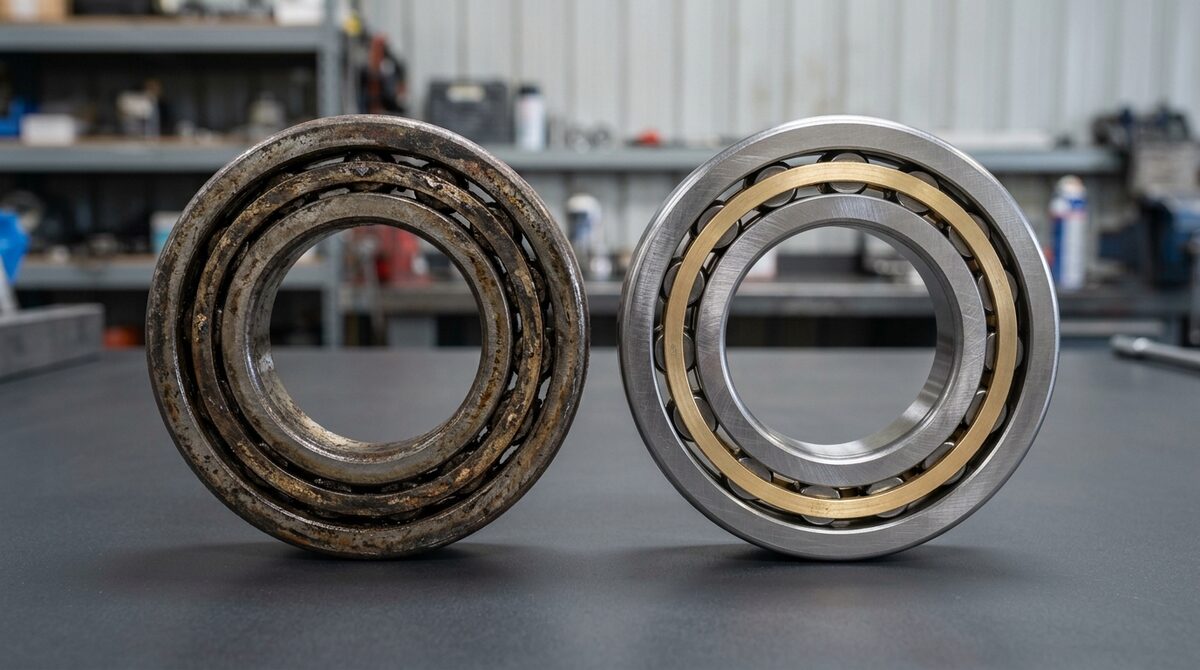
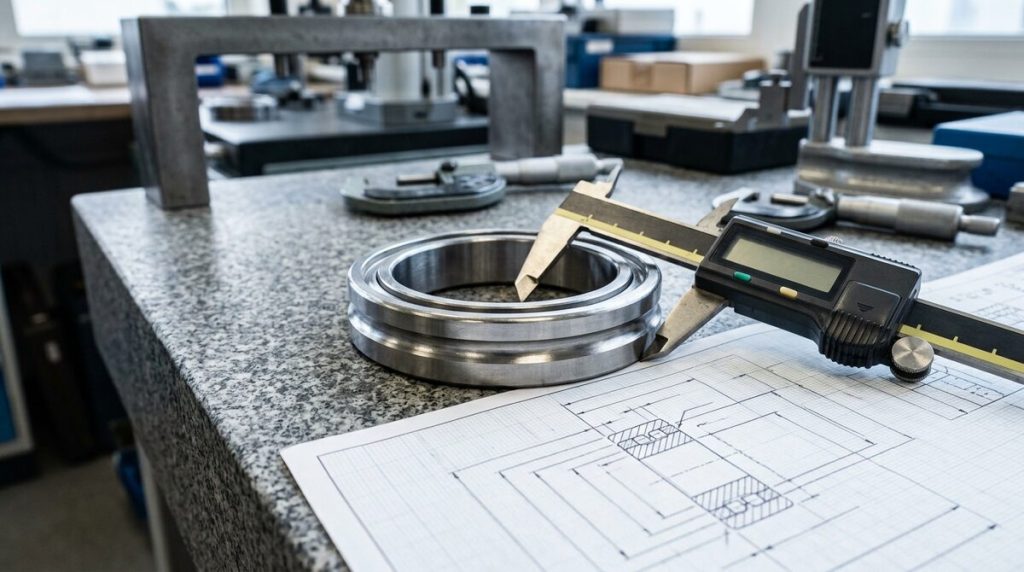
Reverse engineering a legacy bearing is not a simple copy process. The original component must be measured precisely — every dimension, tolerance, material composition, and surface finish. Those measurements then inform a new manufacturing specification that replicates the performance of the original component.
For defence applications, the process carries additional demands. Material traceability must be documented at every stage. The replacement component must meet the same operational requirements as the original — load capacity, dimensional accuracy, and environmental resistance. Small-volume production runs also require manufacturing partners capable of producing to specification without the volume economics that drive standard commercial bearing production.
The Bearing Specialists manage this process across the full range of defence bearing types — from thin section bearings for gimbal and optical devices to slewing bearings for heavy artillery platforms — producing reverse engineered components in small volumes that meet the original specification and arrive in 18 weeks rather than 60.
A 42-Week Reduction in Real Programme Terms
A 42-week reduction in military bearing lead times is the difference between equipment back in service before the end of a quarter and equipment sitting idle for more than a year. For a military mobile radar application, a 60-week wait means a radar system out of service for that entire period. An 18-week turnaround means the same system is back operational within a single programme cycle.
The Bearing Specialists have been selected to supply 1,800 bearings as part of a five-year service plan for a military mobile radar application. That selection reflects both supply capability and the ability to sustain delivery across a long programme cycle — not just a single emergency order.
Small-Volume Supply as a Strategic Capability
Standard commercial bearing production runs in high volumes. Defence programmes rarely need thousands of identical components — they need dozens or hundreds of a specific legacy specification, delivered to a traceable standard, on a timeline that keeps equipment operational.
This is where small-volume reverse engineering capability separates specialist suppliers from standard bearing distributors. The Bearing Specialists work in the volumes defence programmes actually require — not the minimum order quantities that commercial suppliers impose. Whether the application calls for angular contact bearings for radar systems or hybrid ceramic bearings for naval platforms, the result is military bearing lead times that reflect the programme’s actual needs rather than a manufacturer’s production economics.
Read more about our defence bearing capability
Frequently Asked Questions
01What causes military bearing lead times to reach 60 weeks?
Military bearing lead times stretch to 60 weeks or more when original components are discontinued, manufacturers have changed production priorities, or the required volumes are too small for standard production runs. Each of these factors adds time at every stage of the procurement process — identification, qualification, and supply.
02Can all legacy defence bearings be reverse engineered?
Reverse engineering requires access to an original component or sufficient documentation to reconstruct the specification. Where an original component exists, The Bearing Specialists can measure every dimension, tolerance, material, and surface finish to produce a replacement that meets the original performance requirement in small volumes.
03How does small-volume reverse engineering differ from standard bearing supply?
Standard bearing supply draws from existing catalogue stock or established production runs. Small-volume reverse engineering produces components to a reconstructed specification — with full material traceability and documentation — in quantities that match the programme’s actual need rather than a manufacturer’s minimum order requirement.