
The Bearing Specialists | Crawley, West Sussex
The UK's packaging and material handling automation sector is in a sustained expansion. According to Automate UK — the trade association for UK processing, packaging, and robotics machinery — the UK's packaging automation market generated over £2 billion in 2024 and is projected to reach £3.7 billion by 2033. The investment driving that growth is flowing into new packaging lines, upgraded conveyor systems, and higher-throughput processing equipment — predominantly sourced from European manufacturers building to metric DIN and ISO specifications.
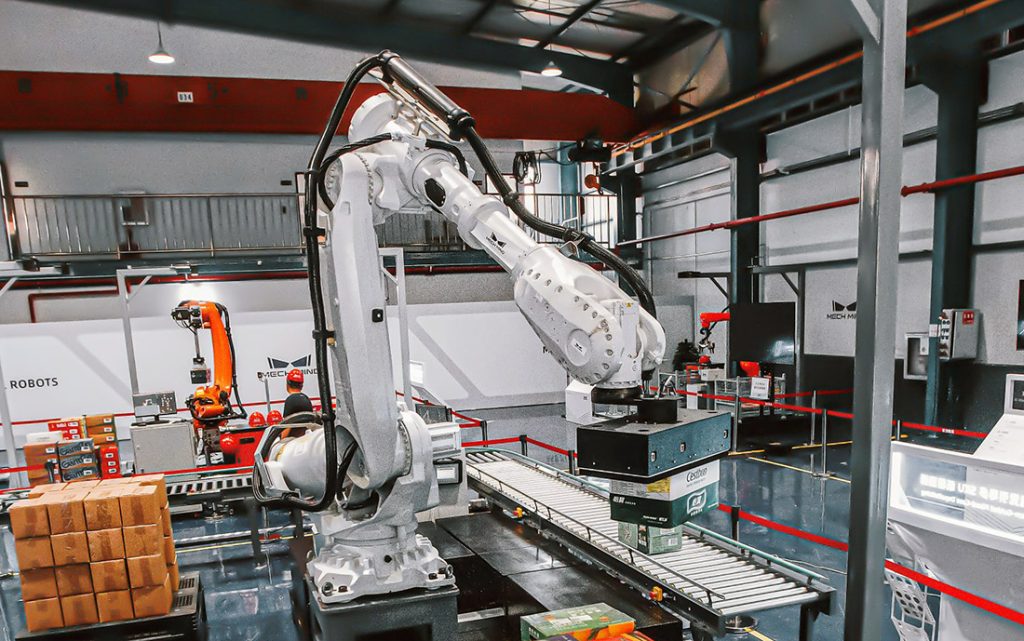
Every packaging line and every conveyor system built to those specifications contains cam followers. They appear in cam-actuated forming sections, product registration and transfer mechanisms, infeed and outfeed guides, indexing tables, and the linear guide assemblies that control product positioning through packaging cycles that run at hundreds of units per minute on high-speed lines. These are not glamorous components. They do not appear in equipment brochures. But their condition and specification directly determine whether a packaging or conveyor system meets its uptime targets, maintains product quality standards, and runs through a full production shift without an unplanned stoppage.
When metric cam followers fail in packaging and conveyor applications, the consequences extend well beyond the cost of the failed component. A cam follower failure on a high-speed packaging line can bring the entire line down in seconds. In food production environments where line stoppages trigger quality hold and traceability investigations, the cost of a single failure event — in production losses, waste, engineering labour, and the paperwork that follows — can be orders of magnitude greater than the annual cost of maintaining the correct cam follower specification across the entire line.
What Packaging Lines Ask of Cam Followers
Packaging machinery subjects cam followers to a demanding combination of load conditions that distinguishes these applications from many other cam follower uses. High cycle rates — packaging lines running at 100, 200, or 300 cycles per minute — mean that the cam follower's outer ring completes an enormous number of contact stress cycles per hour. Repetitive shock loading from product transfer and forming operations creates impact loads that are superimposed on the steady radial load from the cam profile. Variable speed operation during format changes and line starts generates acceleration loads that exceed steady-state running loads significantly.
At the same time, packaging environments frequently introduce contamination challenges that compound these mechanical demands. Food production environments involve water, cleaning agents, food particles, and in some applications steam or high-pressure washdown. Pharmaceutical packaging environments require cam followers specified for clean-room operation with lubricants approved for incidental food or product contact. Even dry goods packaging generates dust and particulates that degrade open lubrication points and accelerate wear on unsealed components.
The metric cam followers that perform reliably in these environments share several characteristics. Sealed construction prevents contaminant ingress without requiring frequent re-lubrication — a significant operational benefit on lines where access during production is constrained. Crowned outer rings compensate for the angular misalignment that accumulates in packaging machine structures as wear develops over time, maintaining distributed contact stress rather than edge loading that accelerates outer ring wear disproportionately. Correct ISO tolerance selection ensures that stud engagement is secure under the cyclic loads packaging machinery generates, without the looseness that allows fretting damage at the stud interface.
What Conveyor Systems Ask of Cam Followers
Material handling conveyors present a different profile of demands that nonetheless places equally stringent requirements on cam follower specification. Where packaging lines subject cam followers to high cycle rates and moderate loads, heavy-duty industrial conveyors impose sustained high radial loads at lower cycle rates, frequently in environments where contamination, vibration, and temperature variation are significant.
European conveyor systems use metric dimensioning as standard, and the cam followers specified for guide rails, tracking mechanisms, and tensioning systems within them need to match the original ISO specifications — not merely approach them within what might seem like acceptable tolerances. The consequence of under-specification appears gradually rather than catastrophically: cam followers that run correctly when new but develop play within their running fit as operating temperature rises; guide assemblies that develop lateral play as outer ring wear accumulates faster than expected; tensioning systems that lose their set position because stud thread engagement is marginal for the actual load conditions.
Make UK's Regional Manufacturing Outlook 2025 confirms that all English regions and devolved nations have now surpassed pre-pandemic manufacturing output levels for the first time since 2019. The logistics and distribution infrastructure supporting that manufacturing recovery is equally dependent on conveyor systems — and those systems are predominantly specified and built to metric standards. As throughput demands on distribution centres and production facilities increase, the cam followers within their conveyor systems face higher cumulative load cycles and longer continuous running periods than at any previous point.
The ISO Fit Tolerance Question in Packaging and Conveyor Applications
One of the most consequential — and most frequently misunderstood — aspects of metric cam follower specification in packaging and conveyor applications is the ISO bore tolerance. The standard designation for metric cam followers references the outer ring geometry and the stud thread dimensions, but the bore tolerance for the housing or track interface needs to be selected by the engineer specifying the installation.
In packaging machinery where cam followers guide product through a forming or transfer section, the relationship between the cam follower outer ring and the guide track needs to be specified with a running clearance that allows smooth tracking without play that would allow product positioning errors. Too tight a fit generates excessive preload that shortens bearing life. Too loose a fit allows the cam follower to rattle in its track, creating the vibration that both damages the bearing and degrades positioning accuracy.
In heavy-duty conveyor guide applications where the cam followers carry structural loads rather than positioning guidance, the tolerance selection shifts — tighter interference fits may be appropriate at the stud thread to prevent the micro-movement that causes fretting corrosion. The outer ring contact with the rail or track may need to be matched to the rail hardness and surface finish to prevent the rail wear that results when cam follower and rail hardness are mismatched.
These decisions require application-specific engineering judgement, not catalogue selection. A bearing distributor who understands ISO fit standards and the specific demands of packaging and conveyor applications will make different recommendations than one who treats metric cam follower selection as a purely dimensional exercise.
As covered in Metric Cam Followers for UK Industrial Machinery: The Complete Specification Guide, the full range of design variants — stud type vs. yoke type, cylindrical vs. crowned outer ring, sealed vs. open construction — interacts with these tolerance decisions to determine the total specification that a packaging or conveyor application requires. Getting each element right, not just the nominal dimension, is what separates a cam follower specification that delivers expected service life from one that generates premature failure calls.
Lead Time and Stock Availability: A Practical Consideration for UK Operations
UK packaging and conveyor operations cannot afford to wait weeks for metric cam followers when a line is down. European suppliers of metric bearing components — the original source for many of the cam followers specified in European-built packaging and conveyor equipment — often carry extended lead times that are acceptable for planned maintenance orders but unacceptable for breakdown situations.
UK-based specialists who stock common metric cam follower sizes and can provide technical cross-referencing support for less common designations offer a significant operational advantage. The ability to confirm that a KR35PP from an Italian packaging machine can be correctly replaced with a specific metric cam follower from UK stock — not merely a dimensionally similar component, but one that meets the ISO tolerance specifications the original was manufactured to — is the kind of technical support that reduces downtime from days to hours.
The Bearing Specialists hold common metric cam follower sizes in UK stock and provide technical guidance on cross-referencing from European equipment designations. Our experience covers German CNC machines, Italian and French packaging lines, and material handling systems from multinational manufacturers — the specific equipment types that UK operations most frequently need metric cam follower support for.
The Bearing Specialists: Metric Cam Follower Expertise for UK Industry
The Bearing Specialists are ISO 9001:2015 certified bearing specialists based in Crawley, West Sussex. Our team has supplied metric cam followers to manufacturers across the UK for years, with expertise covering ISO and DIN standards, European equipment specifications, and demanding applications in automation, packaging, material handling, and precision machining.
Our Services Include:
- Metric Cam Followers — Stud type, yoke type, cylindrical and crowned outer rings, sealed and open construction across the full metric size range for UK industrial applications
- Technical specification support — Tolerance selection, material options, cross-referencing from European equipment designations, and application guidance for demanding operating conditions
Ready to Specify the Right Components? Contact The Bearing Specialists on +44 (0)1280 460116 or email Sales@thebearingspecialists.co.uk to discuss your metric cam follower requirements.
Works Cited
"PPMA." Automate UK, www.automate-uk.com/our-associations/ppma/. Accessed 26 Mar. 2026.
"Regional Manufacturing Outlook 2025." Make UK, July 2025, www.makeuk.org/insights/reports/regional-manufacturing-outlook-2025. Accessed 26 Mar. 2026.
Related Articles
- Metric Cam Followers for UK Industrial Machinery: The Complete Specification Guide
- Metric Cam Follower Failures: The Root Causes UK Engineers Need to Eliminate