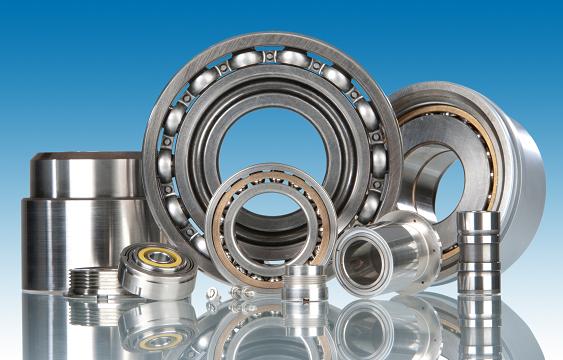
Angular Contact Bearings for Demanding Applications
What Are Angular Contact Bearings?
Angular contact bearings handle combined radial and axial loads that standard bearings cannot manage. Furthermore, the contact angle between the balls and raceways determines load distribution and performance. The Bearing Specialists supply angular contact bearings up to ABEC 7 precision class across CNC machine spindles, defence, robotics, mining, oil and gas, motorsport, and cryogenic applications.
Our angular contact bearings have delivered performance across diverse sectors — from precision CNC machine spindles to defence applications, engines, robotics, agricultural machinery, heavy industrial mining, oil and gas installations, and automotive systems. Consequently, our technical team brings experience that covers both high-speed precision work and extreme operating environments. Furthermore, we have learnt that every industry brings its own challenges — and that successful installations demand knowledge of those challenges before the bearing goes in.
What Every Engagement at The Bearing Specialists Includes
- Precision class selection up to ABEC 7 for applications where accuracy is non-negotiable
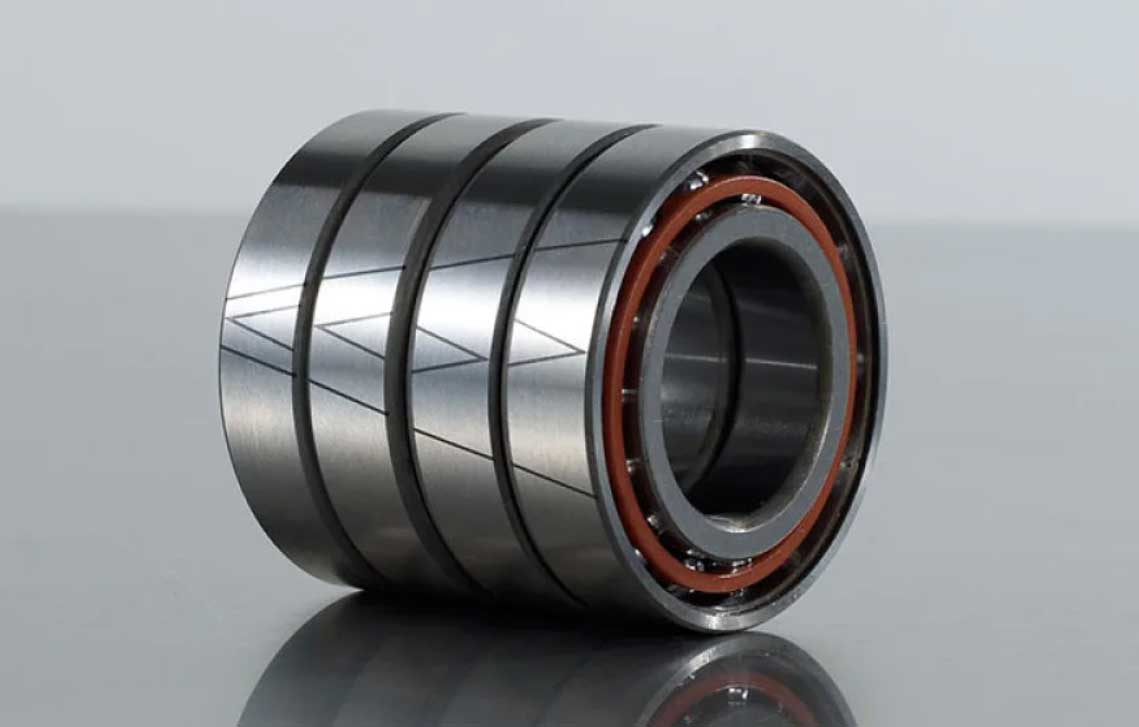
- Pairing configuration guidance — back to back, face to face, and tandem mounting
- Custom preload specification for your specific application
- Lubrication chemistry matched to operating conditions and temperatures
- Material selection covering ceramic hybrid, speciality alloys, and advanced cryogenic materials
- Tolerance stack-up review to prevent preload issues in practice
- Cryogenic thermal expansion coefficient assessment for extreme low-temperature installations
- ISO 9001:2015 and AS9120D:2016 certified supply in progress, backed by decades of practical experience
How We Approach a Bearing Application
Most angular contact bearing failures trace to decisions made before the bearing goes in. Fortunately, our process accounts for the variables that textbooks miss.
Step 1 — Load and Speed Review. First, we confirm the combined radial and axial load profile and the rotational speed. Consequently, the contact angle and precision class are selected for the actual operating condition rather than a catalogue default.
Step 2 — Environment and Temperature Assessment. Next, we assess the operating environment — cryogenic temperatures, clean room cleanliness requirements, mining contamination, or high-temperature operation. Additionally, we calculate thermal expansion coefficient compatibility between bearing components and housing materials where temperature extremes apply.
Step 3 — Lubrication Specification. Then, we match lubrication chemistry to the actual operating conditions. Furthermore, incorrect lubricant specification is one of the three most common causes of premature bearing failure we diagnose — getting it right from the start extends life considerably.
Step 4 — Pairing and Preload Configuration. Once materials and lubrication are confirmed, we specify the correct pairing arrangement — back to back for maximum rigidity, face to face for axial stability, or tandem mounting for increased load capacity. Furthermore, we set custom preload to account for real manufacturing variations rather than paper tolerances.
Step 5 — Supply and Installation Support. Finally, we supply the bearings and provide installation guidance specific to the industry. Contamination management in mining, ultra-precision procedures in CNC applications, and reliability in inaccessible oil and gas locations all require different approaches.
Why Are My Angular Contact Bearings Failing?
Angular contact bearing failures usually trace to one of three causes — incorrect lubricant specification for the operating conditions, thermal expansion coefficient mismatches between bearing components and housing materials in cryogenic or extreme temperature applications, or tolerance stack-up that creates preload problems in practice despite looking acceptable on paper. Furthermore, each failure mode needs a distinct solution rather than a like-for-like replacement.
Angular Contact Bearing Applications We Support
The Bearing Specialists supply angular contact bearings across every sector where combined radial and axial loads meet demanding operating conditions.
CNC Machine Spindles and Robotics. First, CNC machine spindles require ABEC 7 precision class bearings where accuracy is non-negotiable. Additionally, robotics and automation applications need the same precision pairing configurations that CNC spindles depend on.
Defence and Engines. Next, defence and military equipment and engine applications demand bearings that deliver consistent performance under combined loads. Furthermore, these applications benefit from the same material selection and lubrication expertise we bring to every engagement.
Agricultural Machinery and Mining. We also supply angular contact bearings for agricultural machinery and heavy industrial mining operations. Contamination management and reliability under extreme loads distinguish these applications from precision work. Consequently, sealed configurations and material selection for harsh environments drive every recommendation.
Oil and Gas. Furthermore, oil and gas installations in inaccessible locations need angular contact bearings that deliver reliable performance without frequent maintenance access. Material selection for corrosive conditions and lubrication for remote operation are critical in these environments.
Motorsport. Finally, motorsport applications demand angular contact bearings where every fraction counts. One racing team we worked with experienced repeated bearing failures with premium components. By analysing their specific operating temperatures and speeds, we recommended an alternative lubrication system. The outcome was elimination of failures and improved lap times through reduced friction.
What the Industry Data Shows
According to SKF’s angular contact bearing technical documentation, correct preload selection is critical for angular contact bearing performance — too little preload leads to ball skidding at high speeds whilst too much generates excessive heat and accelerated wear. Furthermore, the same documentation confirms that paired mounting arrangements must be specified for the actual combined load direction, not assumed from catalogue defaults. For applications running combined radial and axial loads at elevated speeds, these two decisions determine whether the installation achieves design life or fails early.

What Makes a Reliable Installation?
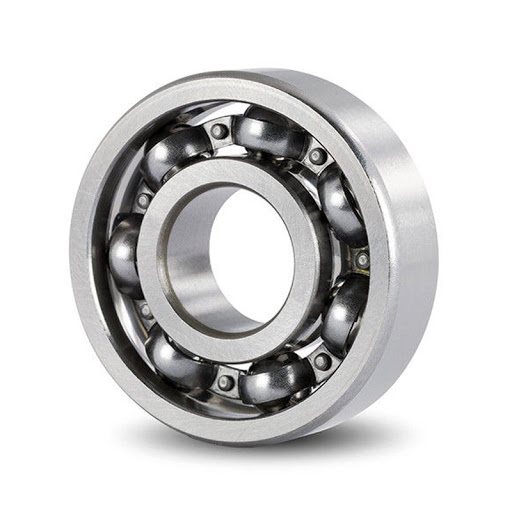
A reliable angular contact bearing installation starts with the correct contact angle for the combined load profile, ABEC precision class matched to the accuracy requirement, and lubrication chemistry specified for the actual operating temperature and speed. Furthermore, pairing arrangement and preload must account for real manufacturing tolerances, not paper specifications. Consequently, installations that look correct on a drawing but ignore these real-world variables are the ones that fail in service.
Inside Our Bearing Capability
The Bearing Specialists combine formal technical qualifications with hands-on problem solving across challenging installations. Furthermore, our material science capability covers ceramic hybrid bearings for pharmaceutical and clean room environments, speciality alloys for nuclear applications, advanced materials for cryogenic temperature performance, and heat-resistant compounds for high-temperature operations.
For space-constrained applications where angular contact bearings need to be complemented with compact load capacity, our thin section bearings deliver comparable performance in smaller designs. Additionally, for cryogenic installations where thermal expansion coefficients challenge conventional solutions, our cryogenic bearings and hybrid ceramic bearings extend the capability of angular contact systems into extreme low-temperature environments. Furthermore, our metric cam follower range and imperial cam follower range complement angular contact bearings in the many complex systems where both component types work together.

Why Choose The Bearing Specialists for Angular Contact Bearings?
The Bearing Specialists supply angular contact bearings backed by decades of practical application experience — precision class selection, pairing configuration, lubrication chemistry, material science, and cryogenic thermal expansion management on every enquiry. Furthermore, customer outcomes include doubled operational life in mining equipment and complete elimination of failures in motorsport applications. ISO 9001:2015 and AS9120D:2016 certification in progress backs every solution we deliver.
Frequently Asked Questions About Angular Contact Bearings
Angular contact bearings handle combined radial and axial loads that standard bearings cannot manage. Furthermore, the contact angle between the balls and raceways determines how the load distributes across the bearing. Consequently, the correct contact angle must be selected for the actual combined load direction in your application — not assumed from a catalogue default.
ABEC 7 is a high-precision bearing tolerance class used in applications where dimensional accuracy and running accuracy are non-negotiable — CNC machine spindles, precision instruments, and high-speed rotational equipment. Furthermore, specifying a higher precision class than the application requires adds cost without benefit. Consequently, we confirm the actual accuracy requirement before recommending a precision class.
The three standard configurations are back to back mounting for maximum rigidity, face to face mounting for axial stability, and tandem mounting for increased load capacity in one axial direction. Furthermore, custom preload specifications are set for each configuration to account for real manufacturing variations rather than theoretical tolerances.
Cryogenic failures almost always trace to thermal expansion coefficient mismatches between bearing components and housing materials. Furthermore, fits that are correct at room temperature become dangerously loose at cryogenic operating temperatures. Consequently, we calculate thermal expansion across the full operating temperature range and select materials with compatible coefficients before specifying any cryogenic angular contact bearing installation.
We supply angular contact bearings across CNC machine spindles, defence and military equipment, engines and automotive systems, robotics and automation, agricultural machinery, heavy industrial mining, oil and gas installations, and motorsport. Furthermore, our material science capability extends coverage into pharmaceutical clean rooms, nuclear applications, and cryogenic systems where standard steel bearings cannot perform.
Ready to Solve Your Bearing Challenge?
The Bearing Specialists deliver angular contact bearings matched to the actual load, precision, environment, and pairing requirements of your application. Consequently, engineers across precision manufacturing, defence, mining, motorsport, and cryogenic sectors rely on our selection expertise and installation guidance.