
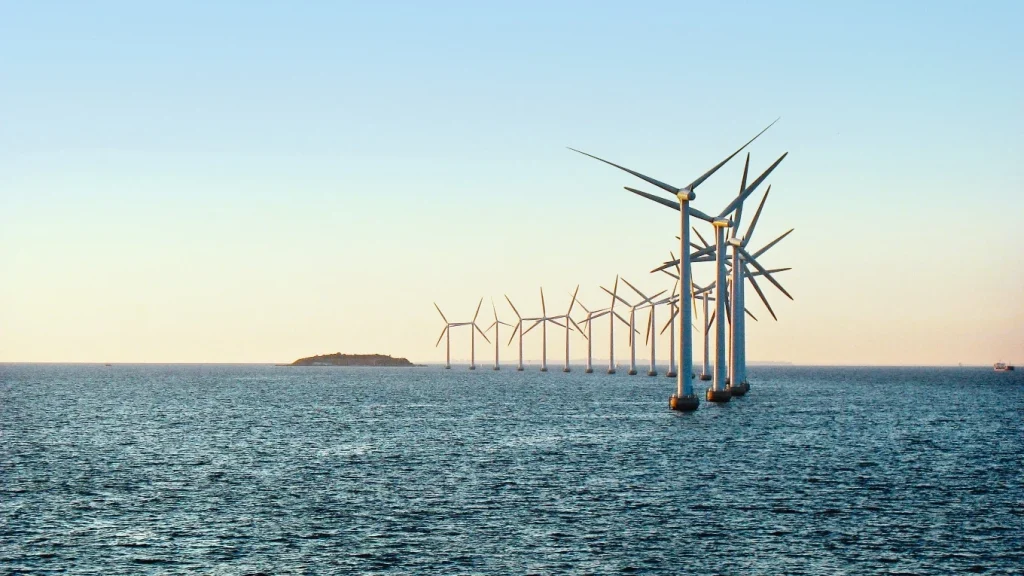
The Bearing Specialists: Precision Bearings for Heavy Industry
Britain's offshore wind sector faces a stark arithmetic problem. Current installed capacity must nearly triple within five years to meet government targets, yet the specialised slewing ring bearings essential for offshore wind turbine operation already face lead times exceeding six months. This collision between ambitious renewable energy policy and manufacturing reality is forcing wind farm developers, turbine manufacturers, and bearing suppliers to fundamentally rethink procurement strategies that served adequately when deployment proceeded at a more measured pace. The Bearing Specialists has worked directly with wind energy procurement teams and OEM engineers across the UK, providing application engineering support where standard off-the-shelf solutions simply cannot meet the demands of offshore marine environments.
The Clean Power 2030 Action Plan sets targets between 43 and 51 gigawatts of installed offshore wind capacity. Achieving even the lower bound requires adding roughly 28 gigawatts to current capacity within five years, representing construction rates Britain has never previously sustained. Each new turbine installation demands multiple precision slewing bearings for yaw and pitch systems, components that cannot be rushed through manufacturing without compromising the quality essential for 25-year operational lifespans in harsh marine environments.
Wind farm operators across the North Sea, Irish Sea, and Celtic Sea are discovering that bearing availability increasingly constrains project timelines. Turbine manufacturers report extending order lead times while bearing producers struggle to expand capacity quickly enough to match demand. The engineering challenges extend beyond simple production volume to encompass wind turbine bearing material selection, quality assurance, and technical support that offshore applications require.
The Scale of UK Offshore Expansion
UK Offshore Wind Capacity Targets 2030: What They Mean for Bearing Demand
Wind power now represents a cornerstone of British electricity generation. Offshore Energies UK reports that wind contributed 29.5 percent of UK electricity in 2024, with offshore installations alone providing 17.2 percent of total generation. This share will grow substantially as the government pursues its clean power ambitions, but achieving targeted capacity requires an annual investment of approximately £15 billion and securing historic levels of renewable energy procurement through upcoming allocation rounds. For bearing suppliers and procurement teams alike, the scale of this expansion represents both an extraordinary opportunity and an unprecedented supply chain challenge.
The September 2025 Contracts for Difference allocation round must clear approximately 8.4 gigawatts of new offshore wind capacity if Britain is to remain on course for Clean Power 2030 objectives. This represents the most ambitious auction round ever attempted, requiring successful bidders to progress from contract award through construction to commissioning within increasingly compressed timescales. Every gigawatt of new capacity translates to wind turbine slewing bearing requirements that existing supply chains struggle to satisfy.
Investment projections indicate £65 billion flowing into UK offshore wind over the next five years, funding both new installations and the grid infrastructure necessary to connect remote generation sites to population centres. Grid investment requirements alone total approximately £58 billion to support 50 gigawatts of offshore wind by 2030. This capital deployment creates opportunities throughout the supply chain, but bearing manufacturers face particular pressure given the technical complexity and extended production cycles their products require. Teams sourcing precision components for oil, gas, and energy applications will find comparable supply chain considerations addressed on our oil and gas sector page, where harsh-environment specification challenges follow similar engineering logic.
Scotland has emerged as a focal point for offshore wind bearing demand. Government statistics confirm that offshore wind capacity grew by 8.1 percent in 2024, adding 1.2 gigawatts to UK totals, with Scotland accounting for nearly all this additional capacity through projects including Moray West at 882 megawatts and Neart Na Gaoithe at 224 megawatts. The concentration of development in Scottish waters reflects available wind resources but creates logistical challenges for component supply chains serving construction sites in challenging maritime conditions.
Why Slewing Bearings Matter for Turbine Performance
How Does a Wind Turbine Yaw Bearing Work — and Why Does It Matter?
Modern offshore wind turbines depend on slewing ring bearings for two critical functions that directly determine energy capture efficiency and operational reliability. Yaw bearings allow the entire nacelle assembly to rotate horizontally, keeping the rotor oriented into prevailing winds as directions shift throughout the day. Pitch bearings enable individual blade angle adjustments, optimising energy capture across varying wind speeds while providing storm protection capability when conditions exceed operational limits. Understanding the difference between pitch bearing and yaw bearing wind turbine functions is fundamental to specifying the correct load ratings, materials, and sealing arrangements — the two components face entirely different stress profiles despite sitting within the same turbine.
These aren't applications where generic industrial bearings can substitute for purpose-designed components. Offshore yaw bearings must handle combined axial, radial, and moment loads while rotating under enormous nacelle weights that increase with each generation of larger turbines. Pitch bearings experience continuous oscillating motion under blade root loads that create complex stress patterns different from simple rotational applications. Both bearing types must function reliably for 25 years despite constant exposure to salt spray, temperature extremes, and vibration.
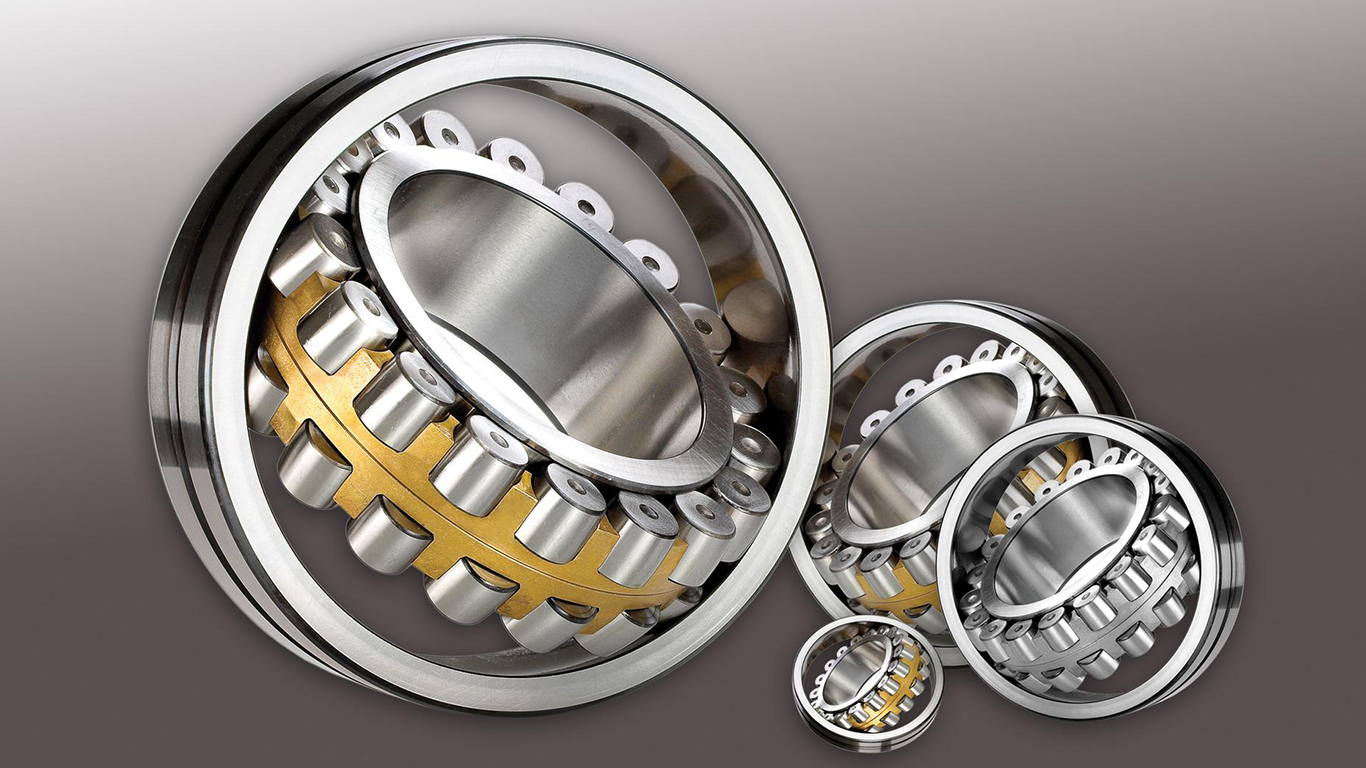
What Size Slewing Bearing Does a Large Offshore Wind Turbine Need?
The trend toward larger turbines compounds wind turbine slewing bearing engineering challenges. Modern offshore installations routinely exceed 8 megawatts, with 15-megawatt designs now entering production. Larger rotors demand proportionally larger bearings with tighter manufacturing tolerances. A 15-megawatt turbine's yaw bearing may exceed 5 metres in diameter, requiring specialised manufacturing equipment, heat treatment facilities, and quality inspection capabilities that only a handful of global suppliers possess. Our range covers custom slewing ring bearings from 200mm to 5000mm+ diameter, meaning we are equipped to support both current-generation and next-generation turbine specifications as rotor sizes continue to grow.
Load factors demonstrate why bearing quality matters for energy economics. England's offshore wind installations achieved a 40.2 percent load factor in 2024, while Scottish installations reached 35.0 percent. These percentages represent how much electricity installations actually generate compared to theoretical maximum output. Higher load factors translate directly to improved project economics, but achieving optimal performance requires bearings that maintain precise positioning accuracy throughout extended service lives without the unplanned maintenance that offshore access difficulties make extremely costly.
Engineering Specifications for Marine Environments
Wind Turbine Bearing Corrosion: Why Marine Environment Specifications Are Non-Negotiable
Offshore wind presents bearing engineers with operating conditions that challenge conventional material and design approaches. Salt-laden atmospheres promote corrosion that can penetrate seals and degrade raceway surfaces. Temperature swings between summer and winter extremes stress seals and affect lubricant viscosity. Continuous vibration from rotor operation and wave-induced tower motion creates fatigue loading patterns that accumulate over millions of cycles. These combined stressors mean that specifying a slewing bearing for offshore wind by simply applying standard industrial bearing parameters is one of the most reliable routes to premature failure and expensive unplanned offshore maintenance.
Wind Turbine Bearing Material Selection: Steel Grades for Offshore Marine Service
Material selection begins with steel grades offering appropriate combinations of hardness, toughness, and corrosion resistance. Standard bearing steels provide excellent performance in controlled industrial environments but deteriorate rapidly when exposed to marine atmospheres. Through-hardened steels resist surface damage but may lack the toughness required for shock loads during extreme weather events. Case-hardened steels offer toughness with hard surfaces but require careful specification of case depth and core properties for specific loading conditions. For applications that also require non-magnetic properties — increasingly relevant as sensor systems are integrated into nacelle assemblies — our hybrid ceramic bearings offer a proven alternative that combines non-ferromagnetic performance with the hardness and corrosion resistance demanded by offshore service.
Wind Turbine Bearing Sealing Arrangement: What Offshore Applications Require
Sealing arrangements distinguish offshore wind bearings that survive service from those that fail prematurely. Multiple seal stages prevent saltwater and abrasive particles from reaching the raceways while retaining lubricant during continuous rotation. Labyrinth seals provide primary protection against gross contamination, while contact seals manage fine particle exclusion. Seal materials must resist degradation from salt exposure and UV radiation while maintaining flexibility across operating temperature ranges. Getting the sealing arrangement right for a North Sea wind farm environment is as technically important as the bearing's load rating — a correctly rated bearing with inadequate sealing will fail years before its mechanical design life.
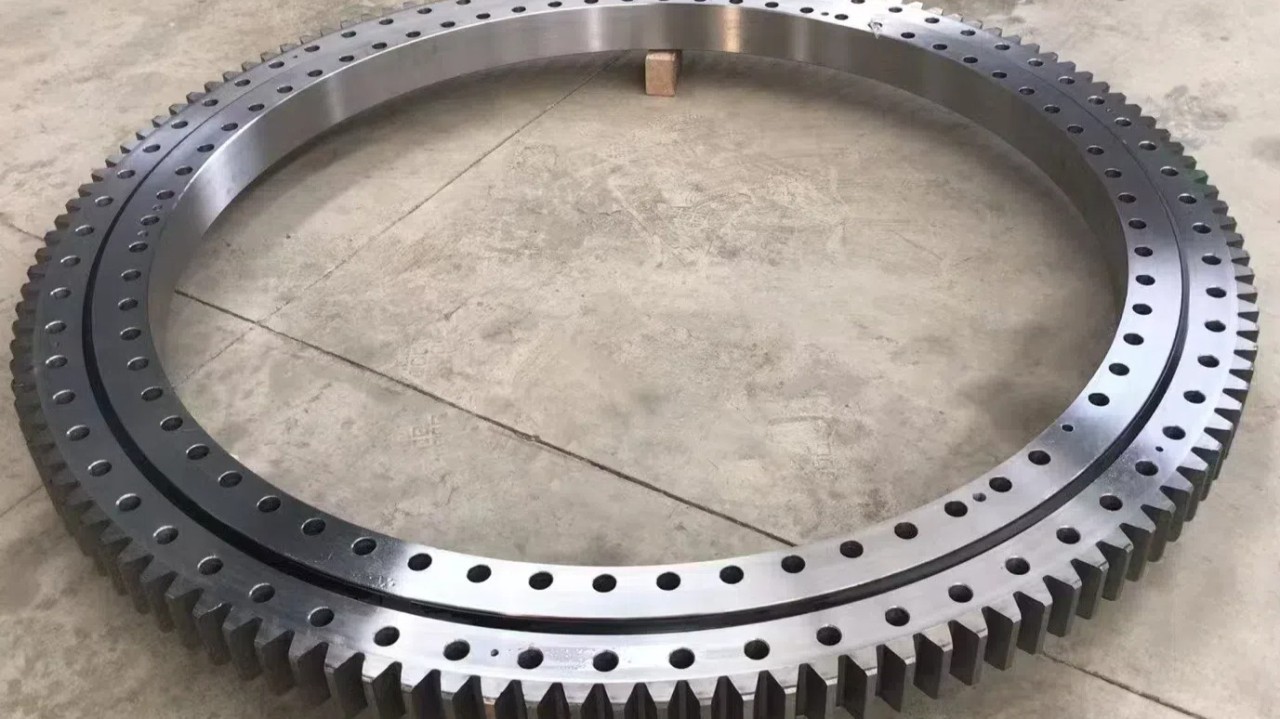
Slewing Bearing Grease Selection for Offshore Wind Applications
Lubrication systems for offshore yaw and pitch bearings typically employ automated grease dispensing that maintains lubricant films despite continuous motion and environmental contamination pressure. Slewing bearing grease selection balances corrosion protection, temperature stability, and compatibility with seal materials. Some installations employ centralised lubrication systems that monitor consumption and alert operators to abnormal usage patterns, indicating potential seal degradation or bearing wear. For teams also working in high-temperature process environments where lubricant thermal stability becomes a parallel concern, our high-temperature bearings range addresses applications where standard lubricant formulations reach their operational limits.
Understanding the broader context of bearing demand across wind, defence, and medical sectors helps explain current supply constraints. Why UK Heavy Industries Are Racing to Secure Slewing Ring Bearings examines how multiple high-growth industries compete for manufacturing capacity that expands slowly relative to demand.
Supply Chain Realities and Lead Times
How to Reduce Offshore Wind Turbine Bearing Lead Times: What Procurement Teams Must Know
The gap between UK offshore wind ambitions and bearing manufacturing capacity creates procurement challenges that project developers cannot solve through simple advance ordering. Large-diameter slewing bearings require specialised production equipment that operates near capacity across the global manufacturing base. Adding significant new capacity requires capital investment in ring rolling mills, heat treatment facilities, and precision grinding equipment that takes years to specify, install, and commission.
Current lead times for custom offshore wind bearings extend beyond six months for many specifications, with some complex configurations requiring longer. This timeline forces turbine manufacturers to commit bearing orders far earlier in project development cycles than they historically preferred, accepting inventory carrying costs and specification change risks as unavoidable consequences of supply constraints. Developers who delay procurement decisions discover that preferred suppliers cannot accommodate their timelines. The most effective procurement strategy we see from experienced wind energy clients is committing to early supplier engagement — ideally twelve months or more ahead of installation — while building buffer stock arrangements that protect against unplanned replacement demand.
Quality assurance adds time that cannot be compressed without compromising reliability. Offshore wind bearings undergo material certification, dimensional inspection, and often destructive testing of sample components from each production lot. Non-destructive testing, including ultrasonic examination and magnetic particle inspection, verifies material integrity throughout bearing volumes. These procedures ensure that bearings leaving factories will perform as specified, but they require time that production schedules must accommodate.
The supply pressure affects not only new installations but also wind turbine bearing replacement requirements for operating wind farms. Bearings that fail prematurely or suffer damage during installation require replacements that compete with new-build orders for manufacturing capacity. Operators maintaining inventory of spare bearings for critical applications find that restocking orders face the same extended lead times as original equipment, requiring planning that anticipates failures months before they occur. Considering the installation, proof load, and removal tools required for safe and precise bearing handling during installation and replacement is an equally important part of planning that procurement teams often overlook until it becomes a scheduling problem.
What Procurement Teams Need to Know
How to Specify Slewing Bearings for Offshore Wind: An Engineer's Procurement Guide
Successful bearing procurement for offshore wind applications requires technical engagement that goes beyond specification sheets and competitive bidding. Procurement teams achieving reliable supply and appropriate specifications invest in understanding how their operating conditions differ from generic industrial applications and communicate these requirements clearly to potential suppliers. Suppliers who ask detailed questions about your operating conditions — load cases, environmental exposure, rotation cycles, maintenance intervals — are demonstrating the engineering depth that separates reliable offshore bearing supply from commodity purchasing.
Application engineering discussions should address actual wind turbine bearing load calculation rather than simplified design assumptions. Wind turbine loads vary with operating conditions, including partial load operation, emergency stops, and extreme weather events that create stress patterns different from steady-state assumptions. Bearing suppliers with offshore wind experience can evaluate whether proposed specifications adequately address these conditions or whether modifications would improve reliability and service life.
Material certifications deserve careful attention for offshore applications. Specifications should require traceability from raw material through finished bearing, with documentation confirming that steel chemistry, heat treatment, and final properties meet requirements. Generic certifications referencing standard specifications may not address the specific corrosion resistance or toughness requirements that offshore marine environments demand.
Logistics planning must account for the physical scale and weight of large slewing bearings. Transport from manufacturing facilities to offshore construction sites requires specialised handling equipment and careful routing to accommodate component dimensions. Installation vessels must accommodate bearing weights and dimensions, with lifting procedures that protect finished surfaces from damage during handling. These practical considerations affect project scheduling in ways that procurement teams must coordinate with construction planners. Our bearing staking and swaging tools and specialist installation tooling support correct bearing handling procedures that protect precision surfaces from damage during these critical installation stages.
For applications requiring specialised material properties, including non-magnetic grades for certain sensor applications or enhanced corrosion resistance for particularly harsh environments, Non-Magnetic Slewing Bearings: Meeting Defence and Medical Sector Precision Requirements provides detailed guidance on available options and their appropriate applications.
The Floating Wind Frontier
Floating Offshore Wind Bearing Challenges: Celtic Sea and Scottish Waters Engineering
Beyond fixed-bottom installations in relatively shallow waters, floating offshore wind technology promises access to deeper sites where stronger, more consistent winds offer improved capacity factors. The Celtic Sea and waters off Scotland present opportunities for floating wind installations that could eventually contribute substantially to UK generation capacity. Industry analysis suggests investment in floating offshore wind may overtake fixed-bottom installations by 2033 as the technology matures and costs decline. For bearing engineers, floating wind represents a genuinely new specification challenge — one where the dynamic loading environment is fundamentally different from anything the industry has accumulated decades of experience with on fixed-bottom foundations.
Floating platforms create distinct bearing challenges compared to fixed installations. Platform motion in response to waves adds dynamic loading components that fixed foundations don't experience. Yaw and pitch systems must accommodate platform movements while maintaining turbine orientation and blade angles for optimal energy capture. These combined loading conditions require careful engineering analysis to ensure slewing ring bearing specifications adequately address actual operating stresses.
The UK supply chain's experience with offshore oil and gas operations provides relevant capabilities for floating wind development. Skills in marine operations, subsea systems, and harsh environment engineering transfer to floating wind applications. Bearing suppliers who understand both wind turbine requirements and marine industry practices can support customers developing floating wind projects with specifications appropriate for this emerging application. Our oil and gas sector page details how we support the offshore energy industry with precision bearing solutions in corrosive, high-load marine environments — capabilities that directly transfer to floating wind specification and supply.
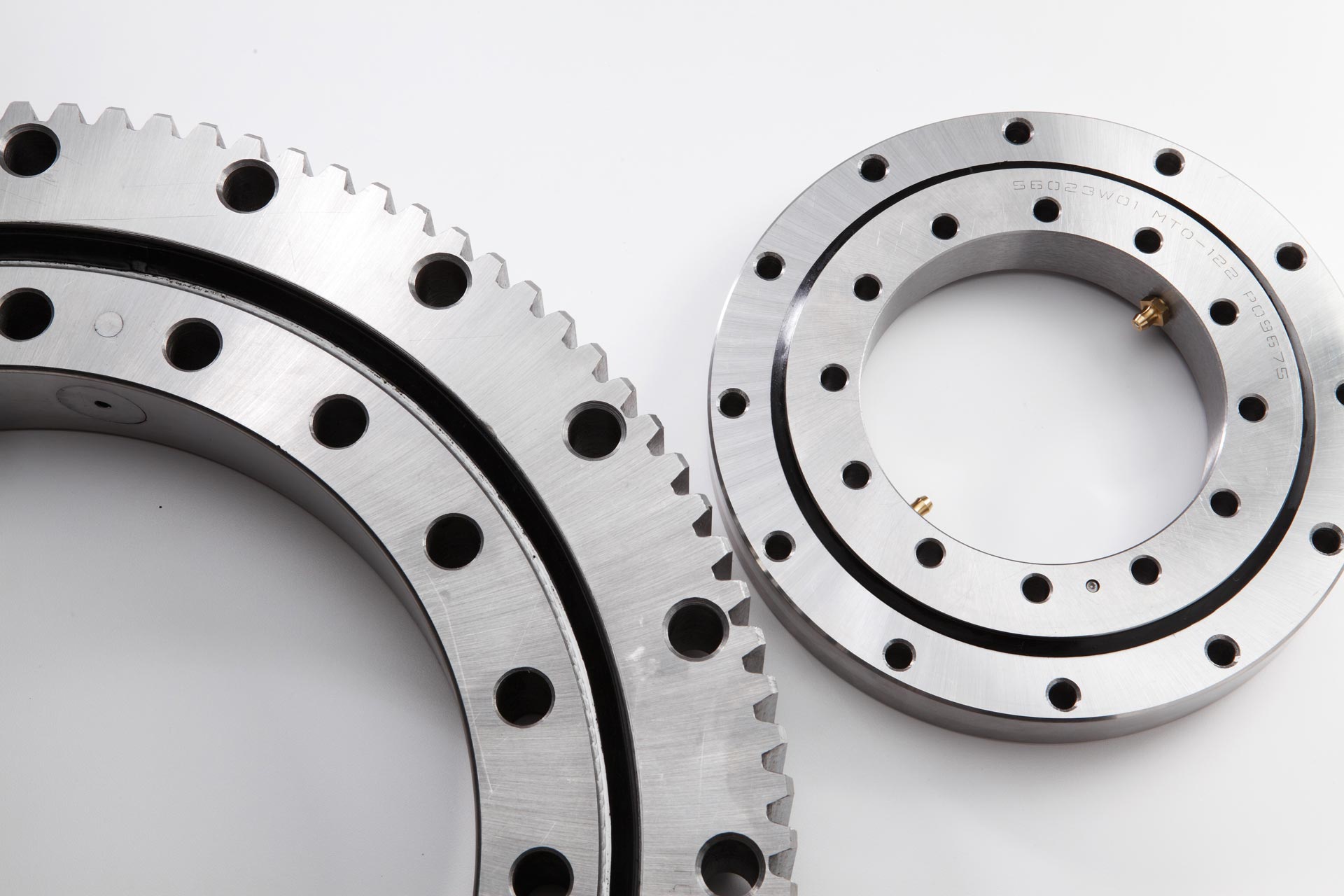
Frequently Asked Questions: Wind Turbine Slewing Bearings
Q1: How does a wind turbine yaw bearing work?
A wind turbine yaw bearing is a large-diameter slewing ring bearing mounted between the tower top and the nacelle base. It enables the entire nacelle — which houses the generator, gearbox, and rotor hub — to rotate horizontally through 360 degrees, tracking changes in wind direction throughout the day. The yaw bearing carries the full weight of the nacelle and rotor assembly while withstanding continuous moment loads and dynamic forces. In offshore turbines exceeding 8 megawatts, the yaw bearing can measure 4 to 5 metres in diameter and weigh several tonnes.
Q2: What is the difference between a pitch bearing and a yaw bearing on a wind turbine?
The yaw bearing controls the horizontal rotation of the entire nacelle to face into the wind, while pitch bearings are located at the root of each blade and control the blade's angle relative to the wind. Yaw bearings handle large, slow-rotation loads continuously throughout the turbine's life. Pitch bearings experience oscillating motion and frequent angular adjustments as blade angles are varied to optimise power output or protect the turbine in high winds. Both are slewing ring bearings, but their load profiles, rotation patterns, and failure modes differ significantly, requiring separate specification approaches.
Q3: How long do wind turbine slewing bearings last?
Offshore wind turbine slewing bearings are designed for a minimum 25-year service life, matching the planned operational lifespan of the turbine installation. Achieving this service life in practice depends on correct material specification for the marine environment, appropriate sealing arrangements that exclude saltwater and abrasive particles, regular lubrication maintenance, and avoiding installation damage. Bearings that suffer early seal degradation or operate in under-specified configurations may require replacement well before their design life, which is particularly costly in offshore locations where access is expensive and weather-window constrained.
Q4: Why are offshore wind bearing lead times so long?
Lead times for offshore wind slewing bearings — particularly large-diameter custom specifications — now regularly exceed six months because global manufacturing capacity for large-diameter precision bearings is operating near its limit. Ring rolling mills, heat treatment furnaces, and precision grinding equipment capable of producing bearings in the 3 to 5-metre diameter range are scarce globally. The simultaneous demand from wind energy, defence, and medical sectors competes for this limited capacity. Adding new production capacity requires multi-year capital investment programmes, meaning supply constraints are structural rather than temporary.
Q5: What materials are used in offshore wind turbine bearings?
Offshore wind slewing bearings typically use through-hardened or case-hardened bearing steels selected for the combination of surface hardness, core toughness, and resistance to marine corrosion. Sealing materials include nitrile or fluoroelastomer compounds chosen for salt resistance and UV stability. Lubricants are specialist grease formulations offering corrosion protection alongside temperature stability and seal compatibility. For applications where sensor integration requires non-magnetic bearing components, austenitic stainless steel or ceramic rolling elements provide non-ferromagnetic alternatives at a performance trade-off.
Q6: What causes wind turbine bearing failure in offshore environments?
The most common causes of offshore wind turbine bearing failure are raceway corrosion following seal degradation, allowing saltwater ingress, surface fatigue from accumulated cyclic loading, inadequate or incorrect lubrication causing lubricant film breakdown, and installation damage from improper handling during transport or installation procedures. In pitch bearings, fretting corrosion from small oscillatory movements under high contact stress is a recognised failure mechanism. Regular condition monitoring, correct lubrication intervals, and proper installation procedures all significantly reduce premature failure rates.
Q7: How should I procure slewing bearings for a floating offshore wind project?
Floating offshore wind bearing procurement requires earlier supplier engagement than fixed-bottom projects because the dynamic loading environment — with platform motion adding to turbine loads — means standard fixed-bottom bearing specifications cannot be used without engineering review. Procurement teams should begin technical discussions with suppliers at least twelve to eighteen months before the required delivery. Specifications should address combined static and dynamic loads from both turbine operation and platform movement, with particular attention to the oscillating load components that floating foundations introduce. Material traceability and quality documentation requirements should be established early in supplier discussions.
Q8: What is the load factor for UK offshore wind turbines, and why does it matter for bearing specification?
UK offshore wind load factors measure how much electricity an installation actually generates compared to its theoretical maximum. England's offshore installations achieved a 40.2 percent load factor in 2024, while Scottish installations reached 35.0 percent. For bearing engineers, load factor data validates assumptions about how continuously bearings are operating under significant loads. Installations consistently achieving high load factors accumulate bearing fatigue loading faster than sites with lower capacity utilisation, which affects bearing life calculations and recommended inspection intervals. Sites with above-average capacity factors may benefit from more conservative bearing specifications to maintain the reliability that planned 25-year asset lifespans require.
The Bearing Specialists: Your Partner in Precision Solutions
The Bearing Specialists supply precision slewing ring bearings across the UK for wind energy, defence, medical, and automation and robotics applications. Our engineering team provides comprehensive application reviews addressing load calculations, wind turbine bearing material selection, sealing arrangements, and maintenance planning for demanding offshore environments. We bring direct experience supporting offshore wind procurement teams — from early-stage specification development through to quality documentation and logistics planning — giving clients confidence that bearing specifications are right before orders are placed, not after problems emerge.
Our Services Include:
Slewing Ring Bearings — Custom and standard bearings from 200mm to 5000mm+ diameter for offshore and onshore wind applications
Technical Consulting — Application engineering, ensuring slewing ring bearing specifications match actual offshore operating requirements
Ready to Discuss Your Requirements? Contact The Bearing Specialists to arrange a proper application review with our engineering team.
Works Cited
"Record increase in offshore wind capacity critical to Clean Power 2030 goal, says OEUK report." Offshore Energies UK, 15 May 2025, oeuk.org.uk/record-increase-in-offshore-wind-capacity-critical-to-clean-power-2030-goal-says-oeuk-report/. Accessed 29 Jan. 2026.
Spry, William. "Regional renewable electricity in 2024." Department for Energy Security and Net Zero, 30 Sept. 2025, assets.publishing.service.gov.uk/media/68da76bbef1c2f72bc1e4b77/Regional_renewable_electricity_in_2024.pdf. Accessed 29 Jan. 2026.
Related Articles
- Why UK Heavy Industries Are Racing to Secure Slewing Ring Bearings
- Non-Magnetic Slewing Bearings: Meeting Defence and Medical Sector Precision Requirements