
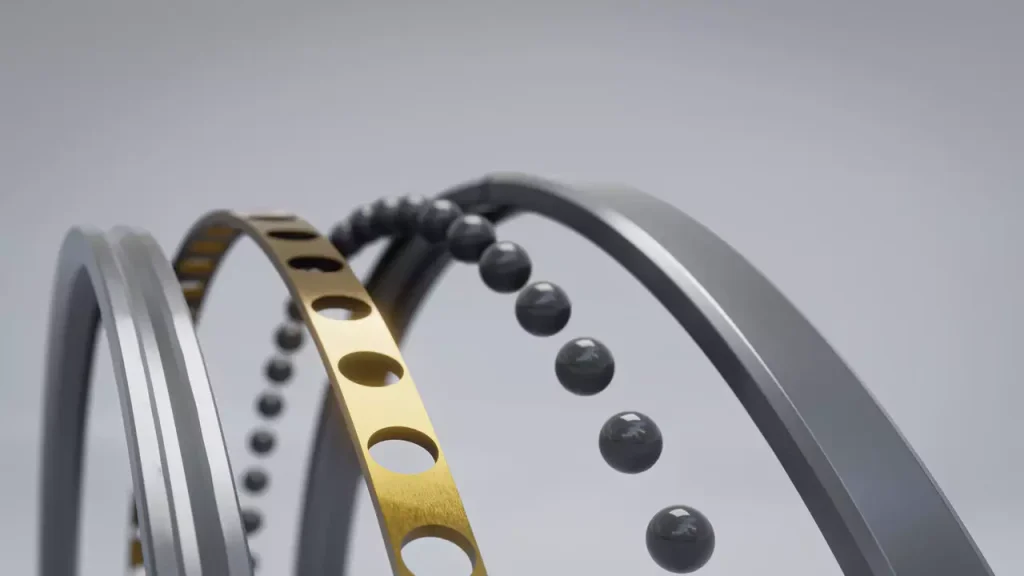
The Bearing Specialists: Precision Bearings for Heavy Industry
Some applications cannot tolerate any magnetic interference whatsoever. When a radar system must detect incoming threats without electromagnetic distortion, or an MRI scanner needs to generate clean magnetic fields for diagnostic imaging, standard steel bearings become liabilities rather than assets. The growing sophistication of UK defence systems and the NHS diagnostic expansion both demand specialised slewing bearings manufactured from non-magnetic materials that most industrial suppliers cannot provide.
This requirement extends beyond simple material substitution. Non-magnetic slewing bearings for defence and medical applications must maintain the load capacity, precision, and durability of conventional steel bearings while eliminating ferromagnetic properties that would compromise system performance. Meeting these specifications requires engineering expertise, specialised manufacturing processes, and quality assurance procedures that distinguish precision bearing specialists from general industrial suppliers.
The convergence of UK defence modernisation and NHS diagnostic capacity expansion creates unprecedented demand for these specialised components. Procurement teams accustomed to sourcing standard industrial bearings discover that non-magnetic specifications transform routine purchasing into technical projects requiring careful supplier evaluation and extended lead time planning.
Defence Systems Driving Non-Magnetic Requirements
Modern military systems rely increasingly on sensitive electronic equipment where magnetic interference degrades performance or creates dangerous operational blind spots. Radar pedestals supporting rotating antenna arrays must enable smooth, precise movement without introducing magnetic fields that distort signal processing. Fire control systems tracking targets depend on bearing assemblies that contribute no electromagnetic noise to sensitive targeting calculations. Naval vessels mounting weapons systems near magnetic anomaly detection equipment require bearing solutions that remain invisible to the ship's own sensors.
The scale of UK defence investment underscores the growing importance of these specialised components. Defence Equipment & Support recently awarded a £453.5 million contract to manufacture 40 production standard ECRS Mk2 active electronically scanned array radars for RAF Typhoons, sustaining 1,300 highly skilled UK jobs over the next decade across Edinburgh, Lancashire, and Luton. Each advanced radar system depends on precision rotating components that must not interfere with the sophisticated electronic warfare capabilities these systems provide.
The broader Typhoon programme supports more than 20,000 jobs throughout the UK, contributing £1.4 billion to the economy annually. As the Strategic Defence Review positions Typhoon as the backbone of UK combat air capability until the 2040s, maintenance and upgrade programmes will require ongoing supplies of specialised components including non-magnetic bearings for sensor and weapons systems.
Ground-based radar installations face similar requirements. Artillery-locating radar systems, air defence networks, and surveillance equipment all incorporate rotating assemblies where magnetic interference compromises detection capability. The investment in these systems continues accelerating as the UK strengthens its position within NATO integrated air and missile defence networks.
Medical Imaging Equipment Demands
MRI scanners represent the most demanding application for non-magnetic bearing technology. These diagnostic systems generate powerful magnetic fields measured in Tesla that would violently attract any ferromagnetic material within the scanner room. Patient table positioning mechanisms, gantry rotation systems, and auxiliary equipment must all function reliably within intense magnetic environments without being affected by or contributing to magnetic field distortions that degrade image quality.
The NHS diagnostic imaging programme represents one of the largest expansions in healthcare infrastructure history. NHS England publishes comprehensive diagnostic imaging statistics tracking millions of imaging procedures annually, with MRI representing a substantial and growing share of diagnostic activity. The Community Diagnostic Centre programme has established over 160 facilities bringing advanced imaging closer to patients, each requiring equipment with non-magnetic components for MRI installations.
The diagnostic imaging workforce presents particular challenges alongside equipment requirements. Industry analysis indicates the imaging workforce requires thousands of additional staff to meet demand, with significant shortfalls among consultant radiologists. This staffing pressure increases the importance of equipment reliability, as scanner downtime becomes increasingly costly when trained operators are already stretched thin.
CT scanners, while not requiring the same level of non-magnetic specification as MRI systems, still benefit from reduced electromagnetic interference in their precision positioning mechanisms. The trend toward hybrid imaging systems combining multiple modalities creates additional complexity in component specifications as different technologies share common mechanical platforms.
Understanding how medical demand combines with wind energy and defence requirements helps explain current supply pressures. Why UK Heavy Industries Are Racing to Secure Slewing Ring Bearings examines the convergence of these sectors competing for precision bearing manufacturing capacity.
Material Science and Engineering Challenges
Non-magnetic slewing bearings typically employ austenitic stainless steels, titanium alloys, or engineering ceramics depending on load requirements and operating conditions. Austenitic stainless grades including 316L and proprietary variants provide good corrosion resistance with minimal magnetic permeability, suitable for many applications where loads remain moderate and cost constraints exist.
Titanium alloys offer excellent strength-to-weight ratios with complete non-magnetic properties, making them attractive for aerospace and defence applications where weight reduction provides operational benefits. However, titanium's lower hardness compared to bearing steels requires careful design to achieve acceptable service life under heavy loads. Surface treatments and specialised heat treatments can improve wear resistance while maintaining non-magnetic characteristics.
Ceramic bearing elements represent the ultimate solution for applications requiring absolute non-magnetic performance combined with exceptional hardness and wear resistance. Silicon nitride balls running on titanium or ceramic races achieve performance characteristics impossible with metallic materials alone. These hybrid or full-ceramic designs command premium pricing but deliver unmatched performance in the most demanding applications.
Manufacturing challenges multiply when working with non-magnetic materials. Conventional bearing manufacturing processes optimised for standard bearing steels require modification for different material properties. Heat treatment procedures, grinding parameters, and quality inspection techniques all demand adjustment. The specialised nature of this work limits the number of suppliers capable of producing non-magnetic slewing bearings to the standards defence and medical applications require.
Specification Development and Procurement Considerations
Procurement teams approaching non-magnetic bearing requirements for the first time often underestimate the technical complexity involved. Standard bearing specifications assume ferromagnetic steel construction, making them inappropriate starting points for non-magnetic applications. Successful procurement requires developing specifications that address magnetic permeability limits, alternative material properties, and application-specific requirements simultaneously.
Magnetic permeability specifications must reflect actual application requirements. Defence systems typically specify maximum permeability values based on electromagnetic compatibility testing that determines acceptable interference levels. Medical imaging applications may require essentially zero permeability for components within the scanner bore while accepting slightly relaxed specifications for peripheral equipment. Understanding these requirements prevents both over-specification that increases costs unnecessarily and under-specification that compromises system performance.
Load capacity calculations require adjustment when non-magnetic materials replace standard bearing steels. Lower material hardness often necessitates larger bearing dimensions or different raceway geometries to achieve equivalent load ratings. Procurement specifications should address dynamic load requirements, static load safety factors, and expected service life rather than simply requesting non-magnetic equivalents of existing steel bearing part numbers.
Lead times for non-magnetic slewing bearings typically exceed standard steel bearings significantly. Specialised material sourcing, modified manufacturing processes, and additional quality inspections all extend production schedules. Project planners should anticipate lead times of six months or longer for custom non-magnetic specifications, particularly for larger diameters or unusual configurations.
Quality Assurance and Testing Requirements
Verifying non-magnetic properties requires testing procedures beyond standard bearing quality assurance protocols. Permeability measurements using calibrated instruments confirm materials meet magnetic specifications before and after heat treatment, as some processing operations can alter magnetic properties. Documentation should trace material certifications through all manufacturing stages to final assembled bearing.
Dimensional inspection for non-magnetic bearings employs the same precision measurement techniques used for standard bearings, but inspection equipment itself must be evaluated for magnetic interference potential. Coordinate measuring machines, roundness testers, and surface finish instruments all require verification that they function correctly near non-magnetic materials without introducing measurement errors.
Functional testing verifies that bearings perform correctly under representative operating conditions. Torque measurements, rotation smoothness, and noise levels all indicate bearing quality and proper assembly. For applications with stringent magnetic requirements, functional testing may include operation within simulated magnetic environments to confirm bearings don't adversely affect system performance.
Certification documentation for defence applications typically requires compliance with specific military standards addressing material properties, dimensional tolerances, and quality management systems. Medical device applications may require biocompatibility testing or compliance with relevant medical equipment standards depending on how closely bearings approach patient contact zones.
For applications combining demanding operating conditions with non-magnetic requirements, understanding how wind energy specifications address harsh environments provides useful reference points. Wind Turbine Slewing Bearings: How UK Offshore Expansion Creates New Engineering Challenges examines material selection and sealing solutions relevant to corrosive environment applications.
Supplier Evaluation and Selection
Evaluating potential suppliers for non-magnetic slewing bearings requires examining capabilities beyond standard bearing manufacturing competence. Key evaluation criteria should include demonstrated experience with non-magnetic materials, appropriate manufacturing equipment, quality management systems addressing specialised requirements, and technical support capabilities for application engineering.
Manufacturing equipment suitability deserves particular attention. Grinding machines, heat treatment furnaces, and assembly facilities optimised for steel bearings may require modification or replacement for non-magnetic material processing. Suppliers should demonstrate that their equipment can achieve required tolerances and surface finishes with the specific materials proposed for your application.
Quality management system certifications provide baseline assurance but don't guarantee capability for specialised applications. Ask potential suppliers about their experience with similar non-magnetic projects, including reference customers if possible. Request sample quality documentation demonstrating the inspection and certification procedures they would apply to your order.
Technical support capabilities indicate whether suppliers can help optimise specifications for your application or merely manufacture to whatever drawings you provide. Suppliers with genuine expertise ask questions about your operating conditions, suggest alternatives when standard approaches won't work, and identify potential problems before they affect delivered bearings. This engineering partnership approach proves particularly valuable for applications where non-magnetic requirements combine with other demanding specifications.
The Bearing Specialists: Your Partner in Precision Solutions
The Bearing Specialists supply precision slewing ring bearings across the UK for defence, medical imaging, wind energy, and industrial automation applications. Our engineering team provides comprehensive application reviews addressing non-magnetic material selection, load capacity verification, and quality assurance requirements for demanding specifications.
Our Services Include:
- Slewing Ring Bearings – Custom non-magnetic and standard bearings from 200mm to 5000mm+ diameter for defence and medical applications
- Technical Consulting – Application engineering ensuring specifications address actual magnetic interference and performance requirements
Ready to Discuss Your Requirements? [Contact The Bearing Specialists] to arrange a detailed technical consultation with our engineering team.
Works Cited
"Diagnostic Imaging Dataset 2024-25 Data." NHS England, National Health Service, www.england.nhs.uk/statistics/statistical-work-areas/diagnostic-imaging-dataset/diagnostic-imaging-dataset-2024-25-data/. Accessed 29 Jan. 2026.
"State-of-the-art radar production contract secures 1,300 UK defence jobs." Defence Equipment & Support, Ministry of Defence, 22 Jan. 2026, des.mod.uk/state-of-the-art-radar-production-contract-secures-1300-uk-defence-jobs/. Accessed 29 Jan. 2026.
Related Articles