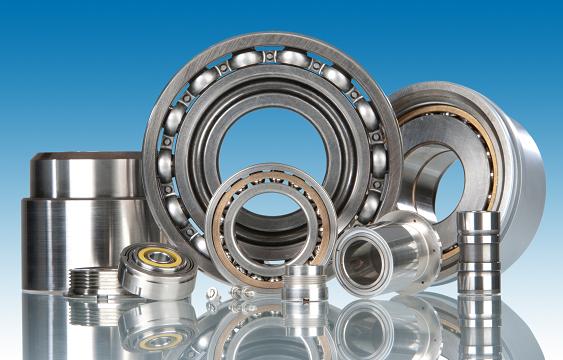
Slewing Rings
What Are Slewing Ring Bearings?
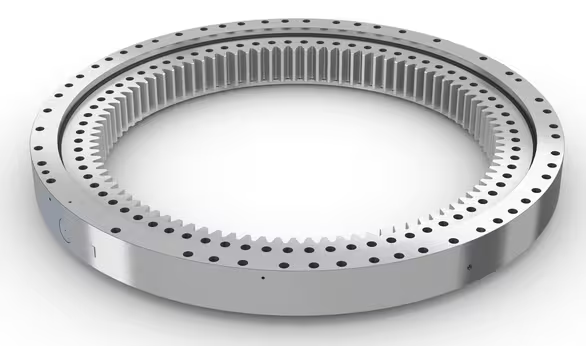
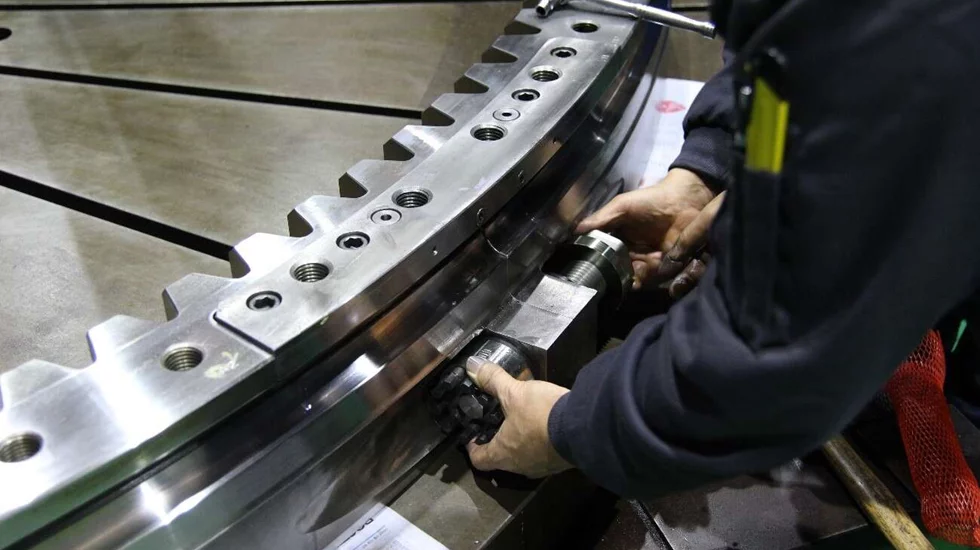
Slewing rings are large diameter bearings that carry radial, axial, and moment loads in a single unit. Often fitted with internal or external gear teeth, they support rotating equipment such as cranes, excavators, wind turbines, and radar systems, replacing complex multi bearing assemblies with one compact, high capacity component.
Large rotating equipment needs bearings that take serious loads from several directions at once, and slewing rings do exactly that. We supply precision slewing ring bearings across the UK for defence, medical, renewable energy, and industrial automation work. Our engineers are bearing specialists with decades of hands on experience, not distributors reading from a catalogue, and we start every project with your real operating conditions.
Slewing Ring Solutions We Deliver
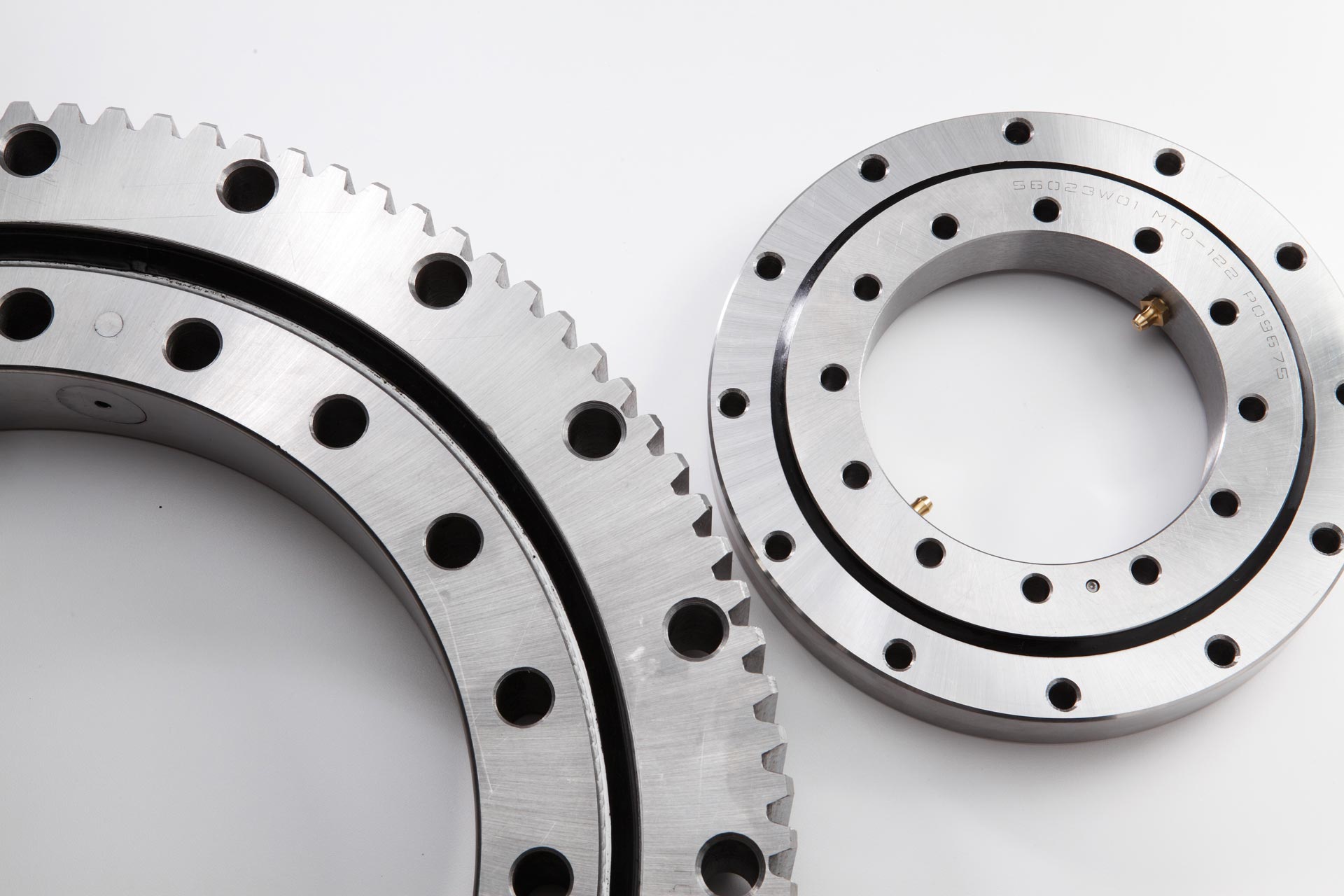
- Standard and custom rings from 200mm to 5000mm and beyond, in single row, double row, triple row, and crossed roller configurations.
- Internal gear, external gear, and gearless options, with teeth integrated directly into the bearing ring to cut assembly complexity.
- Multi row assemblies that raise load capacity without increasing diameter, plus thin section designs for space constrained envelopes.
- Marine grade alloys and corrosion resistant materials for offshore, desert, and arctic deployment, with water resistant greases and improved sealing.
- Non magnetic stainless steels and ceramic elements for MRI scanners and other precision medical imaging equipment.
- FDA compliant materials and food grade lubricants for pharmaceutical, food processing, and clean room environments.
Thin Section Bearing Configurations and Materials
We supply three configurations to meet diverse application requirements:
Radial Contact Bearings handle perpendicular loads efficiently in compact spaces.
Angular Contact Bearings manage combined radial and axial forces. Pairing increases load capacity and moment load resistance.
Four Point Contact Bearings provide bidirectional axial load capability within minimal cross sectional dimensions. We analyse loading conditions to specify optimal configurations.
How Do I Choose the Right Slewing Ring Bearing?
Getting the right slewing rings starts with your actual operating conditions. We review load data, rotation speeds, and environmental factors, then calculate required capacity with sensible safety margins. From there we recommend bearing type, material grade, and sealing arrangement, specify water resistant greases for marine duty, and provide installation guidance covering mounting surface preparation and fastener selection. For high operating temperatures, we specify high temperature bearings with suitable materials and lubricants.
Why Do Slewing Ring Bearings Fail?
Most slewing ring failures come from overlooked detail rather than the bearing itself. Galvanic corrosion between mismatched metals, poor mounting surface flatness, and inadequate sealing in harsh environments cause the majority of early problems. We resolve premature failures by specifying better sealing arrangements and selecting materials matched to the real operating environment, then getting the mounting specification right the first time.
What Sizes and Configurations Are Available?
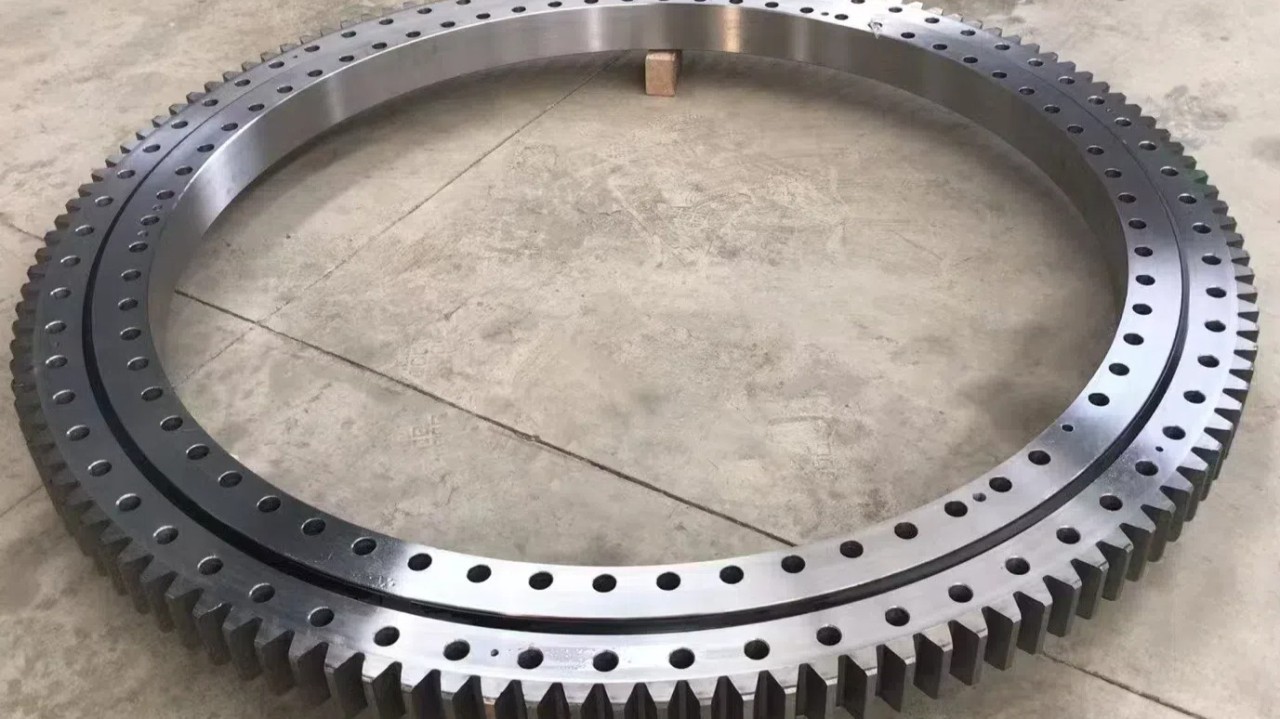
We supply slewing rings from 200mm to over 5000mm in diameter, in single, double, triple row, and crossed roller designs. Gearing can be internal, external, or gearless to suit your drive layout. Multi row construction raises load capacity without growing the diameter, while thin section options fit tight installation spaces.
Which Industries Use Slewing Ring Bearings?
Slewing ring bearings support demanding applications across defence, medical, renewable energy, and heavy industry. Common uses include radar and turret systems, MRI scanners and diagnostic imaging, cranes and excavators with constrained installation spaces, wind turbine yaw and pitch systems in exposed conditions, and manufacturing systems inside clean room environments.
Standards, Traceability, and Engineering Support
We work to ISO, DIN, ABMA, and AGMA standards with full traceability on materials and manufacturing, and we are working toward ISO 9001:2015 and AS9100D:2016 certification. Our engineering team maintains strategic relationships with leading manufacturers worldwide and contributes to industry publications. When a bearing fails, we ask why, then fix the cause at the specification stage so it does not return.
Frequently Asked Questions About Slewing Rings
A slewing ring is a large diameter bearing that handles radial, axial, and moment loads at the same time, usually with gear teeth built into one of the rings. It lets heavy equipment rotate on a single high capacity bearing instead of a complex multi bearing assembly.
We supply slewing rings from 200mm up to more than 5000mm in diameter. Size is driven by load, the rotating structure it supports, and the available installation envelope, and custom diameters are available for non standard equipment.
We supply internal gear, external gear, and gearless slewing rings, so the gear configuration can be matched to your equipment. Our team works with you to select the option that fits your space constraints and load specifications.
Yes. Marine and offshore duty calls for corrosion resistant alloys, water resistant greases, and improved sealing. We also screen for galvanic corrosion between mismatched metals, a common cause of early failure in salt water environments.
Yes. Non magnetic stainless steels and ceramic rolling elements make slewing rings suitable for MRI scanners and diagnostic imaging, where magnetic interference and noise must stay minimal while positioning accuracy stays high.
Get the Right Slewing Ring Bearing First Time
Slewing ring bearings are too important to get wrong. The bearing you choose affects equipment reliability, maintenance cost, and operational safety for years. Whether you need a thin section ring for a tight envelope or a custom engineered solution for marine, desert, or arctic service, our engineers have the technical knowledge to deliver. Tell us your loads, speeds, and environment, and we will specify the right bearing the first time.